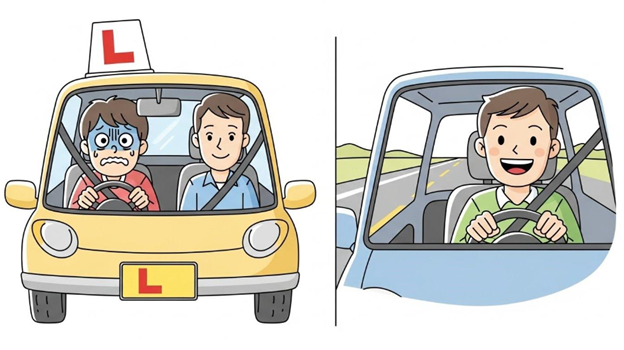
Learner’s Licence
Learner’s Licence is a special and temporary permit. It allows you to learn to drive a specific type of vehicle. It is not full driving licence. It gives official permission to practise driving on public roads.
It is the first step from student to beginner. It is a basic permit. It supports controlled driving. It creates learning authorization and road access.
Permanent Licence
Permanent Licence is a full parivahan driving licence. It is an official document. It gives legal right to drive independently on public roads.
It signifies demonstrated necessary skills and knowledge to drive safely. It works as competence proof, vehicle entitlement, and driver qualification.
Read Also: Buying a Used Car Made Easy: Expert Tips for 2026
Key Difference between DL and LL
Legal Status
The legal status of both licences is different. Learner’s Licence acts as a provisional permit. It controls the usage of vehicles. You must be accompanied by a qualified driver. You must have an experienced driver with a valid Permanent Licence.
A Permanent Licence gives full legal authorization. It gives the right to drive independently. There is no supervision. Drivers must adhere to traffic laws. It creates real independence.
It supports driving rights. It builds strong vehicle type control. Services like Parivahan Sewa make the application and process easy.
Testing System in Real Life
A Learner’s Licence requires you to pass a theory test. This increases knowledge. You learn road signs. You understand signals. You follow traffic rules. This testing follows clear requirements. It is a form of examination and assessment. It improves competency before real driving.
A Permanent Licence needs a practical driving test. You must demonstrate actual driving skills. You show your ability. You prove control of the vehicle. You move safely on the road.
Driving Limits and Freedom
Learner’s Licence has strong restrictions and conditions. You must display “L” plates on your vehicle.
Key rules include:
- limits on the number of passengers you can carry
- areas where you are not allowed
- certain busy roads
- blocked specific times
A Permanent Licence has no special restrictions. Only standard traffic laws apply to all drivers. You can drive freely. You can use the correct vehicle category.
Renewal and Licence Growth
A Learner’s Licence cannot be renewed. Its purpose is to lead to a Permanent Licence. When validity expires, you must have applied and passed tests.
A Permanent Licence can be renewed when the validity period expires. You do not need driving tests again in most cases. Renewal happens only in specific circumstances:
- Long period of expiry
- Medical condition
This defines the upgradation process. It supports clear license period and legal exceptions.
Why LL Matters in Learning?
The crucial role of Learner’s Licence starts early. It becomes the foundation of driver education. A structured period helps you learn driving skills. You understand road safety. You internalise traffic rules.
It supports reducing risks linked to inexperienced drivers. It is an improtant step to becoming a responsible driver and skilled driver.
This stage builds:
- Training
- Practice
- Awareness
- Discipline
- Road sense
- Learning environment
Why Permanent License Matters?
The significant benefits of Permanent License are felt daily. It gives freedom to travel. It supports your own schedule. It creates new opportunities.
It helps in:
- Work
- Education
- Social activities
It is a widely recognized document. It is essential for daily life. It supports commuting and exploring new places. It becomes a milestone of personal achievement and responsibility.
Extra strengths include:
- Identification
- Lifestyle
- Convenience
- Authority to drive
Real Driver Journey View
The journey of a fully licensed driver has two key stages. First comes a provisional pass. This allows practise under supervision. This improves understanding rules and developing basic skills.
The ultimate goal is granting full legal right. After proving competence, both licences become vital steps. Each one has a distinct purpose. This supports ensuring drivers are well-prepared, knowledgeable, and safe.