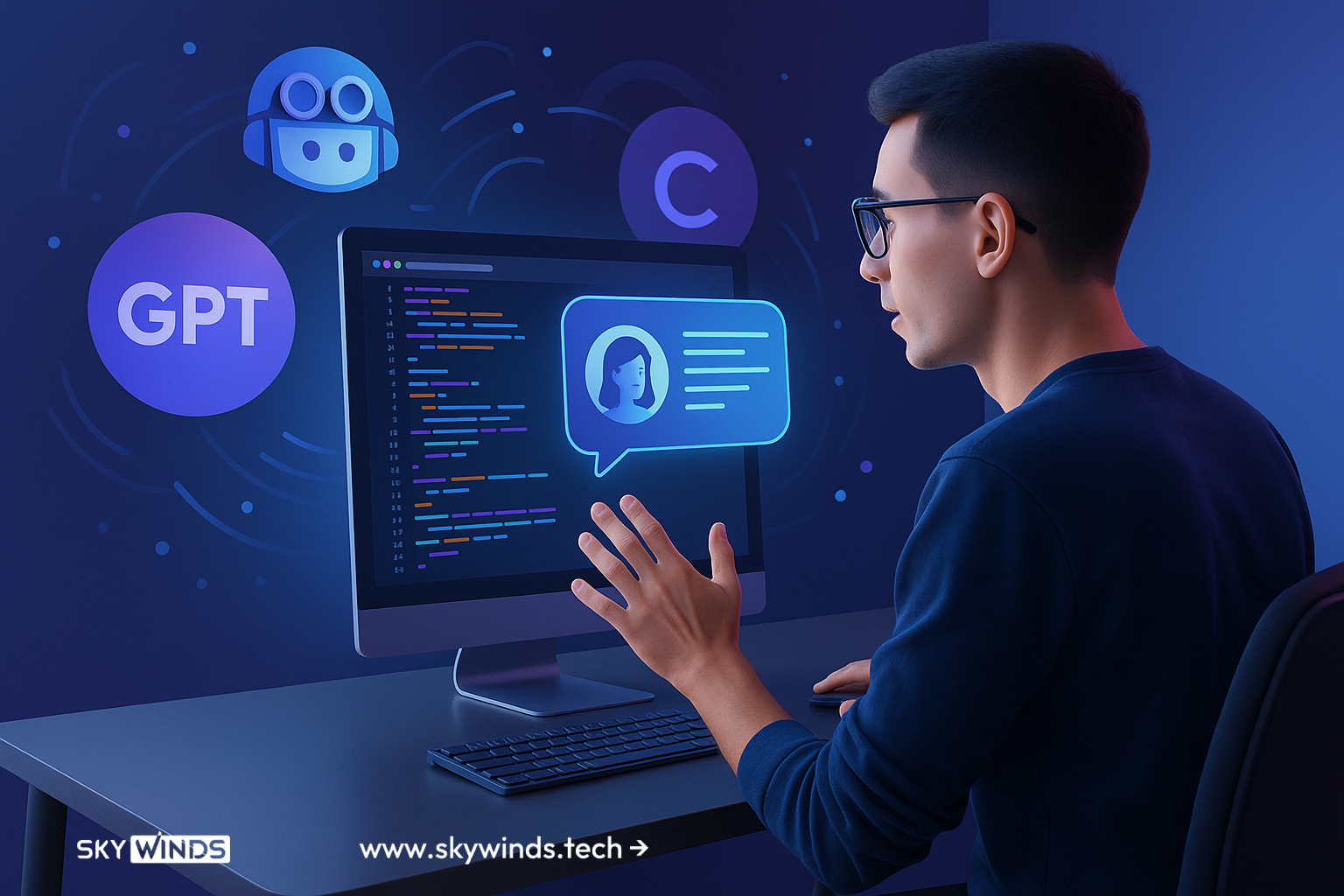
The world of software development is changing rapidly. What once required deep technical expertise, long development cycles, and complex coding knowledge is now becoming more accessible, intuitive, and creative. A new concept is emerging in this space — vibe coding apps.
Vibe coding apps represent a new generation of development platforms where users build applications based on intent, creativity, and interaction rather than traditional programming complexity. Instead of focusing purely on syntax and logic, these platforms emphasize experience, flow, simplicity, and intelligence — turning coding into a more human-centered process.
This shift is transforming how developers, startups, creators, and businesses think about software creation.
What Are Vibe Coding Apps?
Vibe coding apps are AI-powered or low-code/no-code platforms that allow users to create applications using natural language, visual flows, prompts, and intelligent automation. These apps focus on the “vibe” — the idea, experience, and purpose — rather than manual code writing.
Instead of writing thousands of lines of code, users can:
- Describe what they want to build
- Define workflows visually
- Use AI prompts to generate logic
- Design interfaces intuitively
- Connect systems easily
- Automate processes intelligently
This makes app development faster, more creative, and more inclusive.
The Shift from Code-Centric to Intent-Centric Development
Traditional development is code-centric. Everything starts with syntax, structure, and technical design. Vibe coding apps introduce an intent-centric model, where development starts with purpose and experience.
We are moving from:
- Syntax → Semantics
- Code → Concepts
- Logic → Experience
- Engineering-first → Human-first design
- Technical complexity → Creative simplicity
This evolution democratizes software creation, enabling non-developers, founders, marketers, designers, and entrepreneurs to build digital products without deep technical barriers.
Why Vibe Coding Apps Are Gaining Popularity
1. Speed of Development
Apps can be built in days instead of months. Prototypes become products faster.
2. Accessibility
Non-technical users can create functional applications without learning complex programming languages.
3. Creativity First
Focus shifts from technical constraints to user experience and innovation.
4. Lower Costs
Development costs decrease significantly with reduced engineering overhead.
5. Rapid Experimentation
Ideas can be tested, iterated, and improved quickly.
Key Features of Vibe Coding Apps
Modern vibe coding apps typically include:
- Natural language interfaces
- AI-assisted logic generation
- Visual workflow builders
- Drag-and-drop UI design
- API integrations
- Automation tools
- Data modeling systems
- Real-time previews
- Cloud deployment
- Collaboration features
These features allow users to go from idea to application without traditional development friction.
Who Uses Vibe Coding Apps?
Startups
Founders use vibe coding apps to build MVPs quickly without large tech teams.
Creators
Content creators and digital entrepreneurs use them to build tools, platforms, and services.
Businesses
Companies use them to build internal tools, dashboards, automation systems, and customer platforms.
Students
Learners use them to understand logic, workflows, and digital product creation.
Enterprises
Large organizations use them for rapid prototyping and innovation labs.
Real-World Applications
Vibe coding apps are being used to create:
- AI-powered chat apps
- Automation tools
- CRM systems
- ERP dashboards
- Workflow platforms
- Customer portals
- E-commerce systems
- Learning platforms
- SaaS products
- Community platforms
This shows how versatile and powerful this approach has become.
AI and the Rise of Intelligent App Creation
Artificial intelligence plays a major role in vibe coding apps. AI systems help users generate logic, design workflows, optimize performance, and automate operations.
This creates AI-assisted development, where humans provide intent and creativity, and AI provides structure and execution.
Platforms in the AI ecosystem are increasingly focusing on agent-based systems that support intelligent automation and adaptive workflows. One example in this evolving space is Noca AI, which is working on building AI-driven agent platforms that support intelligent system creation and automation. Solutions like Noca AI reflect a broader trend toward making technology more intuitive, adaptive, and human-aligned — aligning perfectly with the philosophy behind vibe coding apps.
Rather than forcing users to think like machines, modern platforms are enabling machines to understand human intent.
The Cultural Shift: Coding as Expression
Vibe coding apps are not just a technical innovation — they represent a cultural shift. Coding is no longer only engineering; it’s becoming a form of expression, creativity, and design.
This new model treats software like:
- A creative medium
- A communication tool
- A problem-solving canvas
- A business expression layer
- A digital storytelling platform
Development becomes more about building experiences than writing code.
Future of Vibe Coding Apps
The future of vibe coding apps will include:
- Fully conversational app building
- Voice-driven development
- AI co-creators
- Autonomous app optimization
- Self-healing systems
- Predictive logic generation
- Multi-agent development systems
- Emotion-aware interfaces
- AI-managed deployments
Soon, people won’t “code” apps — they will describe ideas, and intelligent systems will build them.
Conclusion
Vibe coding apps are redefining how software is created. They remove technical barriers, accelerate innovation, and empower more people to participate in the digital economy.
By combining creativity, AI, and human-centered design, these platforms are transforming development into an intuitive, expressive, and intelligent process.
Supported by evolving AI ecosystems and innovations such as Noca AI, the future of software creation is becoming more accessible, more human, and more powerful.
The future of coding isn’t just about logic and syntax —
It’s about vibe, vision, and creativity.
And vibe coding apps are leading that transformation.