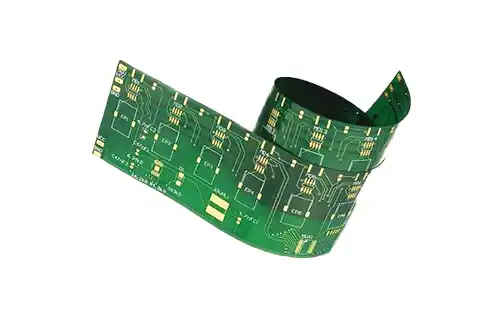
In today’s fast-growing hardware landscape, nearly every industry is shifting toward compact, lightweight, and highly integrated devices. Whether it’s advanced wearables, compact medical equipment, smart consumer gadgets, automotive modules, or industrial controllers, the push for smaller yet more powerful electronics is stronger than ever. This shift is transforming how engineers approach board architecture, especially in the early phases of development.
A major enabler of this transformation is ultra-thin PCB stackup engineering, a discipline that focuses on optimizing thickness, routing density, and signal performance. In these early discussions, organizations increasingly rely on experienced pcb layout services to guide critical decisions that affect the entire hardware design cycle. When managed correctly, thin stackups unlock new possibilities in product size, weight, and electrical performance, making them vital for next-generation innovation.
The Importance of Ultra-Thin PCB Stackups in Modern Engineering
Ultra-thin stackups are not simply “thinner boards.” They represent a deliberate engineering strategy designed to meet the requirements of extremely compact, high-performance electronics. Below are the primary reasons these architectures have become essential across industries:
1 Space-Efficient Design for High-Functionality Devices
Consumer expectations are driven by miniaturization. Devices must deliver more features while fitting comfortably into pockets, wrists, dashboards, or industrial modules. Thin stackups provide the added routing density required to integrate sensors, processors, wireless modules, and power circuits in minimal space, without compromising structural stability.
2 High-Density Interconnection for Complex Routing
Dense routing is at the core of thin stack design. Fine line widths, microvias, blind/buried vias, and tight spacing rules allow engineering teams to handle complex signal flows. These capabilities become essential during the pcb board design phase, where multi-layer routing determines overall system performance.
Products that rely on advanced wireless communication, AI processors, or multi-interface chipsets especially benefit from this density. By efficiently transitioning signals between layers, thin stackups reduce noise and improve electromagnetic behavior.
3 Enhanced Signal Integrity for High-Speed Interfaces
Modern electronics depend heavily on high-frequency signals. Interfaces like DDR, USB-C, RF modules, and LVDS demand optimal impedance control. Thinner dielectrics reduce the variability in signal behavior, improve high-speed transmission, and bring greater predictability to performance.
4 Reduced Weight for Portable and Wearable Electronics
Weight reduction impacts industrial tools, wearables, handheld medical devices, and defense-grade equipment. Lighter boards also reduce strain on mechanical assemblies, improving long-term durability.
5 Lower Form Factor Without Sacrificing Strength
Despite being thinner, advanced materials allow these stackups to maintain rigidity and reliability. Proper lamination ensures mechanical stability even when devices undergo bending, vibration, or temperature fluctuations.
How Ultra-Thin PCB Stackups Are Engineered
Ultra-thin stackups require specialized engineering knowledge and coordination between hardware, mechanical, and firmware teams. This phase heavily involves an experienced embedded system company because system performance depends on how hardware and firmware interact.
Below are the two dominant technical pillars involved in thin-stack engineering:
Material Selection & Layer Architecture
Choosing the right materials determines the stability, flexibility, and signal performance of the final board. Engineers must consider:
- Dielectric thickness uniformity
- Glass weave material and resin content
- Loss characteristics for RF paths
- Copper weight for power distribution
- Thermal behavior under continuous load
For ultra-thin designs, materials such as flexible laminates, rigid-flex substrates, and low-loss dielectrics ensure both compactness and signal quality.
Multiple constraints, mechanical, electrical, and thermal, must align perfectly before moving to layout. Every layer in the stackup has a purpose: controlled-impedance routing, power distribution, shielding, or ground referencing.
Routing Strategy, Density Planning & Simulation
The pcb board design stage determines how well the final product performs. Engineers carefully plan routing depending on the nature of the signals:
- High-speed differential pairs with tight tolerance rules
- Crosstalk reduction via optimized spacing
- Microvia positioning for vertical connectivity
- Power distribution strategies
- Plane assignments for stable return paths
Simulation tools help predict behavior before fabrication. These include:
- Signal integrity (SI) analysis
- Power integrity (PI) modeling
- High-frequency impedance simulation
- EMI/EMC prediction
- RF antenna performance mapping
The combination of simulation and dense routing ensures that the board will behave as intended under real-world electrical conditions.
The Role of Embedded Systems in Thin PCB Innovation
Thin boards are not standalone components, they serve as the foundation for entire embedded platforms. For this reason, involving a capable embedded system company early in development ensures that firmware, hardware, and mechanical constraints align seamlessly.
1 Hardware-Software Co-Design
Engineers evaluate how microcontrollers, sensors, memory chips, RF modules, and power converters interact with firmware. This prevents system conflicts, improves reliability, and supports long-term scalability.
2 Power Optimization Strategies
Battery-powered devices require precise planning to maximize longevity. Embedded teams design efficient power sequences, sleep states, voltage regulators, and current paths to support thin-stack boards with limited copper volume.
3 System-Level Validation
Once prototypes are ready, embedded teams test subsystems such as communication buses, wireless modules, memory interfaces, sensor accuracy, and thermal stability. This validation ensures compatibility across the entire system.
4 Firmware Integration & Tuning
Firmware fine-tuning ensures that high-speed peripherals operate smoothly even under tight board constraints. This includes clock management, power gating, memory-timing adjustments, and signal-stability tuning.
Industry Use Cases Driving Ultra-Thin PCB Stackups
Ultra-thin stackups are used across many industries. Key application areas include:
- Wearables: smart watches, fitness trackers, medical patches
- Automotive: compact driver-assist modules, sensor clusters, interior electronics
- Medical electronics: handheld diagnostic tools, portable monitors
- IoT devices: home automation nodes, industrial sensors
- Aerospace: UAV components, compact navigation systems
- Consumer electronics: wireless earbuds, compact controllers
- Industrial automation: micro-form controllers, smart modules
Each application requires precision, durability, high-speed stability, and strict thermal control, features that well-engineered thin stackups provide.
Conclusion
Ultra-thin PCB stackups have become fundamental to building compact, high-density, high-performance electronics. Their advantages, space efficiency, improved signal behavior, reduced weight, and superior routing density, make them essential for modern technological advancements. Achieving success with these designs requires deep knowledge in pcb layout services, disciplined engineering during pcb board design, and strong involvement from an experienced embedded system company to ensure seamless interaction between hardware and firmware.
Tessolve continues to lead in this space by delivering end-to-end engineering solutions that support advanced hardware design, embedded development, system validation, and complex technology integration. With a strong focus on innovation and engineering excellence, they help companies build the next generation of smarter, smaller, and more reliable electronic products.