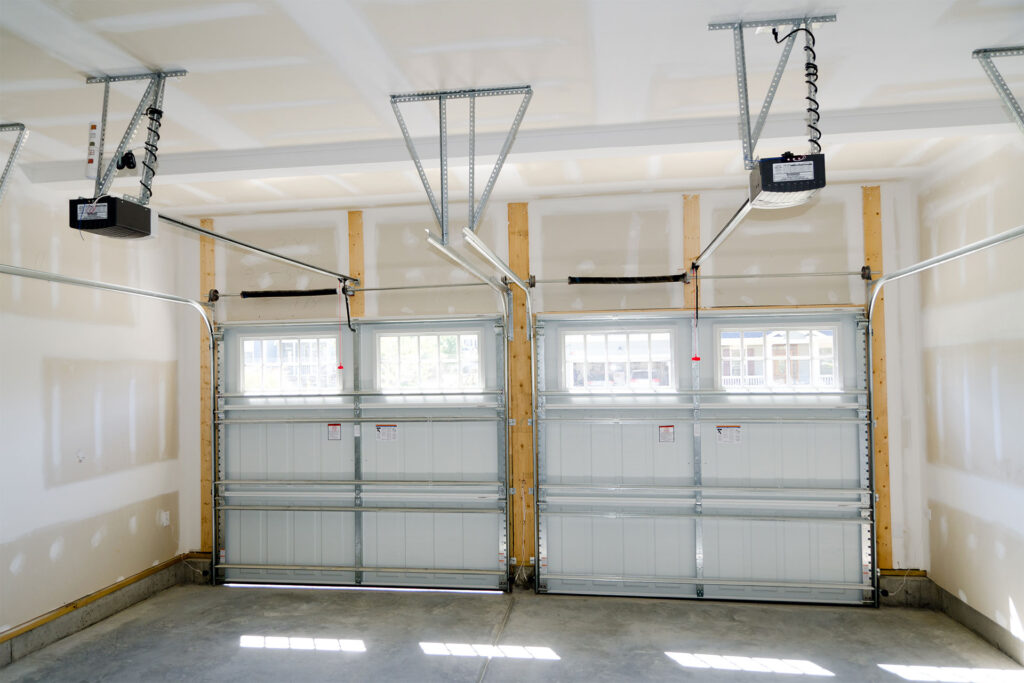
The average garage door operates 1,500 times per year. This device weighs between 150 and 400 pounds, hangs above your children and your vehicle, and has to function as a machine in 105 degrees of heat in July and in 10 below-zero temperatures in January. Bad weather is not usually what causes its sudden death; it erodes it year after year until one day it simply sits there humming.
Cold Weather Goes Straight for the Springs
That’s the thing most homeowners learn in an expensive lesson. A standard torsion spring will last about 10,000 cycles. With four door openings and closings per day, that number is used up in under seven years. The cold won’t be what wears out the components, but it’ll choose the right time to do so: as steel becomes more brittle when cooled, grease in the bearings becomes thicker, and a spring that was already nearly finished decides to give out on a 6 a.m. opening during the coldest day of the year. In the area of grandvalleygaragedoors.com see the same spike after every hard freeze. The warning almost always shows up days earlier. The door feels heavier by hand. It stalls partway up and drifts back down. Your opener starts sounding like it’s lifting something it doesn’t want to lift.
That’s the free warning. Take it.
Heat Does Its Damage Quietly
Grand Junction sits in high desert, and the National Weather Service office here has logged summer afternoons at 107 degrees. Air temperature is only half the story, though. A dark steel door in full afternoon sun runs a lot hotter than the air around it, and that heat expands panels and track slightly, cooks the flexibility out of the rubber bottom seal until it splits, and turns the garage into an oven that shortens the life of the opener’s motor and logic board.
Then there’s glare. Low afternoon sun hitting a photo eye can convince the opener something’s in the doorway, so the door reverses for no reason you can see. Plenty of people buy new sensors over this. Shade them or re-aim them first.
Wind Pulls the Door Out, It Doesn’t Just Push It In
Your garage door is the largest opening in the building, which makes it the weak point in a windstorm. DASMA, the trade association representing most sectional door manufacturers, notes in its technical guidance on high wind events that a door can blow into the house or suck out of the house and therefore must have a pressure rating in both directions. The same paper has another piece of information that most homeowners get wrong: Backing up a vehicle against the door will not solve anything and may actually damage the vehicle.
In the Western Slope, the typical wind issue involves grit. Grit blows into the rollers and hinges, dries up the lubrication and wears out the bearings. If your door starts squeaking in April, then it probably ate up a March wind storm.
Snow, Ice, and the Frozen Bottom Seal
Meltwater runs under the door, refreezes overnight, and glues the rubber seal to your concrete. Then you hit the button. The opener has no idea the door is stuck, so it keeps pulling: cables jump the drum, the seal tears off, or the bottom panel bows.
Free the ice first with warm water and a plastic scraper, then run the door.
Winter also knocks photo eyes out of alignment. The Consumer Product Safety Commission recommends those sensors sit four to six inches above the floor, which is exactly the height that snow, slush, and the corner of a shovel tend to find.
One Table, Four Kinds of Weather
| Conditions | What usually fails first | What to do about it |
| Deep cold | Torsion spring, opener force settings | Balance test in the fall, before you need it |
| Long stretches of heat | Bottom seal, opener electronics, photo eyes | Shade the sensors, replace a cracked seal |
| High wind and blown dust | Rollers, bearings, hinges | Clean and lubricate, confirm the door’s wind rating |
| Snow and ice | Seal frozen to the slab, cables, sensors | Break the ice by hand before touching the opener |
The Fix Is Boring, and It Works
Twice a year, pull the emergency release and lift the door by hand. It should glide, and it should hold roughly halfway up without help. If it slams down or fights you the whole way, the springs are out of balance, and every cold morning after that is a coin flip.
While you’re standing there: wipe the tracks clean, put lithium or silicone lubricant on rollers and hinges (never on the track surface), and run a hand along the bottom and side weather seals.
Before the Next Cold Snap
Extreme weather mostly exposes the doors that were already running on borrowed time. The spring was worn. The seal was split. The sensor was half an inch out of line. February just delivered the invoice.
Twenty minutes in October covers most of it: balance test, lubricant, fresh seal, clear sensors. If the door already feels heavier than it did last winter or sounds different going up, have someone look at it while it’s still a repair and not a replacement.
So, when’s the last time you lifted yours by hand?