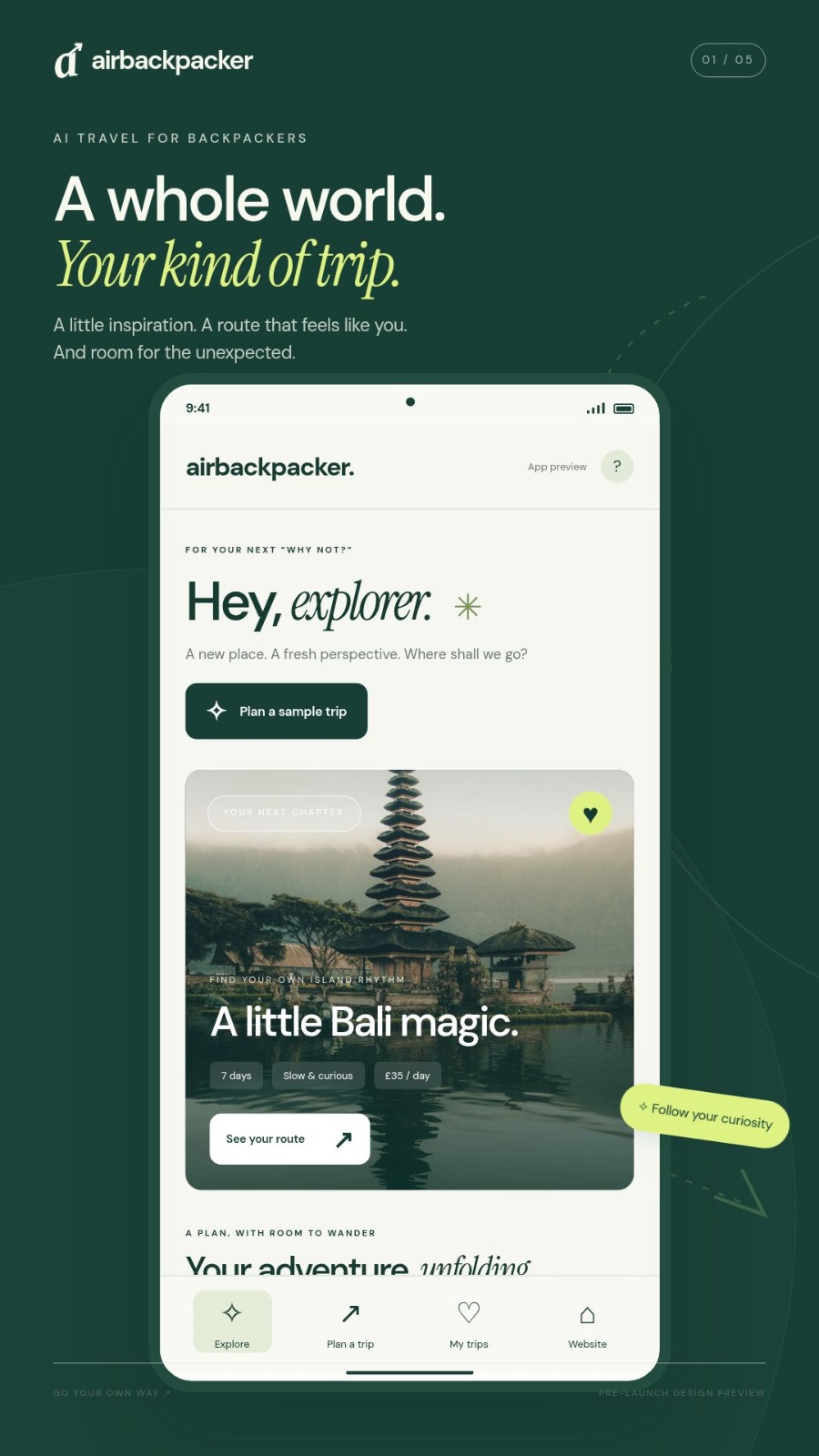
Entrepreneur Prince Addnan Rauf is developing airbackpacker around a straightforward business opportunity: helping independent travellers manage complex travel decisions through one connected digital platform.
The travel technology industry offers consumers an enormous selection of digital services. Travellers can compare accommodation, research destinations, book transportation, explore attractions and organise their journeys through specialised websites and mobile applications.
Yet the availability of these services does not necessarily make travel planning simple.
Someone planning a multi-country journey may use several platforms to compare prices, research destinations and coordinate arrangements. Once the journey begins, unexpected changes can require the entire itinerary to be reconsidered.
For entrepreneur and travel enthusiast Prince Addnan Rauf, this fragmented experience represents an opportunity to develop a more integrated approach to travel planning.
Through airbackpacker, an upcoming AI-powered website and mobile app, Rauf is pursuing a concept that brings personalised itineraries, budget management and adaptable travel planning into a single experience.
The project is currently in its pre-launch phase, with a public website, an interactive design preview and a proposed subscription model available for prospective users to explore.
While its commercial performance has yet to be established, the publicly presented product strategy provides a clearer picture of how airbackpacker intends to position itself in the travel technology market.
Identifying a Business Opportunity in Fragmented Travel Planning
Travel planning is not a single transaction.
It involves a chain of decisions that influence one another.
Choosing a destination affects transportation costs. Transport schedules influence accommodation dates. Accommodation expenses change the amount of money available for activities, while unexpected delays can require several arrangements to be reconsidered.
Although dedicated travel services address individual parts of this process, travellers may still need to coordinate the information themselves.
This creates an opportunity for software that focuses on the overall journey rather than a single booking category.
The business proposition behind airbackpacker is to make travel planning more connected.
Instead of asking users to manage separate schedules, spending calculations and research notes, the proposed platform aims to organise those decisions around a personalised itinerary.
Its planned AI functionality is intended to consider the traveller’s available time, financial limits, interests and changing circumstances.
The commercial question is whether bringing these elements together can deliver enough convenience for travellers to use the service regularly and, in some cases, pay for additional features.
This is the central proposition that airbackpacker will need to demonstrate as it moves toward launch.
What Has airbackpacker Developed So Far?
One of the most useful ways to assess an emerging technology venture is to distinguish its publicly visible progress from its longer-term ambitions.
For airbackpacker, the official website provides several concrete indications of the product’s intended direction.
The publicly accessible experience includes a sample trip-planning interface where visitors can choose a destination, enter a trip duration, set a budget and specify the number of travellers.
It also features destination inspiration and an interactive design preview displaying how future travel itineraries, budget information and itinerary adjustments could appear.
One preview follows a trip around Bali and the Gili Islands.
It illustrates how a ferry delay could lead to changes in the day’s activities, helping explain the proposed approach to adaptable travel planning.
Another screen shows a daily budget with sample expenses and a suggested lower-cost transportation alternative.
The website also introduces planned functionality for family travel, offline itinerary access and optional connections between travellers.
Together, these elements communicate a defined product proposition rather than simply presenting a general idea about artificial intelligence and tourism.
However, they remain design and planning demonstrations. Publicly visible previews do not establish that all the underlying integrations, real-time services or booking functions are operational.
The next meaningful measure of development will be how successfully the completed platform delivers these experiences to actual travellers.
Building a Business Model Around Different Types of Travellers
airbackpacker’s proposed commercial structure reflects an attempt to serve users with different levels of travel activity.
The website currently outlines a free entry-level plan alongside paid Explorer and Family subscriptions.
The planned Free tier includes one AI-planned trip per month, a basic itinerary and hostel search.
The Explorer tier is intended for travellers who require more extensive planning capabilities, including unlimited trips, live itinerary adjustments, budget management and offline access.
The Family tier extends the concept to groups travelling with children, with features intended to support family-oriented scheduling and shared planning.
The website publishes the following proposed prices:
Planned product | Advertised price |
Free | £0 |
Explorer | £6.99 per month or £49 annually |
Family | £11.99 per month or £89 annually |
Single-trip pass | £14.99 for one trip of up to 30 days |
These are planned launch prices published by airbackpacker and may change before the service becomes available.
The different options suggest a business strategy built around accessibility and customer choice.
A traveller arranging one short holiday may have limited interest in a recurring subscription. Someone travelling frequently or organising several journeys could find additional planning features more relevant.
The single-trip pass addresses this distinction by offering a proposed alternative to an ongoing subscription.
From a commercial perspective, that flexibility could help reduce the barrier between trying the platform and becoming a paying customer.
Whether the pricing structure proves effective will depend on customer adoption, product quality and the practical value users receive from the paid features.
The Founding-Member Offer and Early Customer Acquisition
An interesting element of airbackpacker’s pre-launch strategy is its founding-member offer.
The website advertises a proposed Explorer subscription of £29 annually for eligible founding members, with the price intended to remain locked while the subscription stays active.
The offer is limited to the first 2,000 people who reserve a place and subsequently subscribe at launch, subject to the published conditions.
This approach provides a way to encourage early interest before the complete platform becomes available.
It also gives the business a potential opportunity to develop an initial audience that can be contacted when access opens.
The website describes an early-access system that takes account of registration order and referrals.
Users who introduce others may receive priority advantages under the programme, while the published referral offer also describes an Explorer subscription incentive.
These mechanisms form part of the company’s stated launch approach, rather than evidence that a particular number of people have already registered.
For an emerging consumer technology platform, the real value of an early-access programme lies in whether interest eventually translates into active usage and paying customers.
Registration totals alone would not demonstrate product-market fit.
Measures such as completed trip plans, repeat usage, successful itinerary adjustments and paid conversions would provide a more meaningful indication of customer value.
Why Partnerships Could Matter to the Business
airbackpacker’s planned product extends beyond generating travel itineraries.
The website describes an ambition to bring accommodation, transportation, tours, mobile connectivity and travel insurance into a connected travel experience through external partners.
This creates a potentially important commercial dimension.
Instead of building every travel service independently, the platform could connect users with providers that already specialise in particular parts of a journey.
For travellers, the intended advantage would be convenience.
For the business, partnerships could create opportunities for referral arrangements, distribution relationships or other commercial integrations, depending on the agreements eventually established.
However, these possibilities should not be confused with confirmed partnerships or existing revenue streams.
The publicly available product information outlines the intended partner-led experience but does not establish signed agreements, transaction volumes or partner-generated income.
Any future commercial model involving travel providers would need to balance revenue opportunities with the quality and relevance of the recommendations presented to users.
That balance is important for a product whose value proposition depends on helping customers make practical decisions.
Why Artificial Intelligence Needs a Practical Business Purpose
Artificial intelligence has become a prominent feature in consumer software, but describing a platform as AI-powered does not automatically establish its usefulness.
For travel businesses, the relevant question is whether the technology can solve a specific problem more effectively than existing alternatives.
airbackpacker is positioning AI around three related tasks: creating personalised travel plans, helping users understand expenses and suggesting adjustments when circumstances change.
These are practical use cases because travellers often need to process information from multiple sources before making decisions.
A cancelled train, for example, can affect the route, arrival time, accommodation arrangements and remaining budget.
The proposed platform aims to help users consider those connected consequences rather than research each issue separately.
Delivering that experience reliably is also a technical challenge.
Transport data, accommodation availability and pricing can change quickly. The product will need reliable sources of information, understandable recommendations and clear user controls before changes are made.
Accuracy will matter as much as convenience.
For an AI travel platform, a recommendation that appears plausible but relies on outdated information can create real inconvenience and expense.
As a result, the future competitiveness of airbackpacker will depend not only on the design of its interface but also on the quality of the information and decisions it supports.
A Potential Position Between Travel Planning and Booking Platforms
Established travel businesses tend to have recognisable areas of strength.
Accommodation marketplaces focus on finding and booking places to stay. Destination guides help travellers decide where to go and what to experience. Transport services specialise in individual journeys and connections.
airbackpacker is pursuing a different position by placing the itinerary at the centre of the experience.
This does not eliminate the importance of existing services.
Instead, the proposed platform could work alongside specialised travel providers while giving users a more connected view of their journey.
That positioning also introduces a business challenge.
Travellers already have access to familiar booking tools, mapping services and online recommendations. A new platform must demonstrate why adding another service makes the overall experience simpler rather than more complicated.
The answer will ultimately depend on execution.
If airbackpacker can make planning and adjusting a journey meaningfully easier, it may establish a useful role in the travel technology ecosystem.
If the final experience merely reproduces information that travellers can already find elsewhere, differentiation will be harder to achieve.
The Business Milestones That Matter Before Launch
For an emerging platform, product visibility and commercial readiness are not the same thing.
The current airbackpacker website demonstrates a proposed user experience and outlines a pricing strategy, but the most important questions concern how the service will operate once released.
Several milestones will be particularly relevant.
Product reliability: Can travellers consistently create useful itineraries based on realistic budgets and schedules?
Data quality: Can the platform provide accurate transport information, relevant accommodation suggestions and dependable updates?
Customer experience: Do users understand the recommendations and remain in control of important travel decisions?
Customer acquisition: Can the business attract relevant travellers through travel content, partnerships, referrals and other channels?
Commercial conversion: Will enough users find value in the paid features to support the subscription model?
Retention: Will travellers return to plan future journeys after completing their first trip?
These questions reflect the difference between having an appealing technology concept and building a sustainable consumer business.
At present, publicly verified figures for revenue, active customers, investment raised or commercial traction are not available from the project’s website.
The next stage of progress will therefore be best assessed through demonstrable product releases and measurable user outcomes.
Prince Addnan Rauf’s Vision for the Next Stage
The entrepreneurial direction associated with Prince Addnan Rauf and airbackpacker reflects a broader opportunity in consumer technology: organising complex information around the decisions people actually need to make.
The project is not positioned simply as a destination recommendation service.
Its ambition is to create a planning environment where travellers can consider time, cost and personal preferences together.
The public product preview, proposed pricing structure and early-access programme provide a foundation for communicating that vision to prospective users.
The harder work lies in translating the concept into a reliable experience.
This means demonstrating that personalised routes are useful, that budget information is accurate enough to support decisions and that itinerary adjustments work when travel circumstances change.
The business will also need to show that its paid features deliver benefits that justify the proposed subscription costs.
For Rauf, airbackpacker represents an entrepreneurial venture that connects travel enthusiasm with a practical software proposition.
Its future will be determined less by the growing popularity of AI terminology and more by the quality of the travel experience it can deliver.
How Travellers and Potential Partners Can Follow airbackpacker’s Progress
airbackpacker is inviting prospective users and interested organisations to explore its upcoming platform.
Visitors can examine the interactive app preview, review the proposed Free, Explorer and Family plans and learn about the founding-member offer.
The website also includes options for partnership enquiries and investment-related conversations.
For travellers, the most immediate next step is to explore the website and register their interest in early access when the registration service is active.
For potential business partners, the published product concept provides a starting point for understanding the intended role of travel-related services within the platform.
Visit airbackpacker by Prince Addnan Rauf to explore the product preview, planned pricing and early-access information.
The project remains in development, but it presents a clearly defined ambition: bring the disconnected parts of travel planning into a more personalised, practical and adaptable digital experience.
For airbackpacker, the next business milestone is demonstrating that this vision can become a dependable service that travellers choose to use.