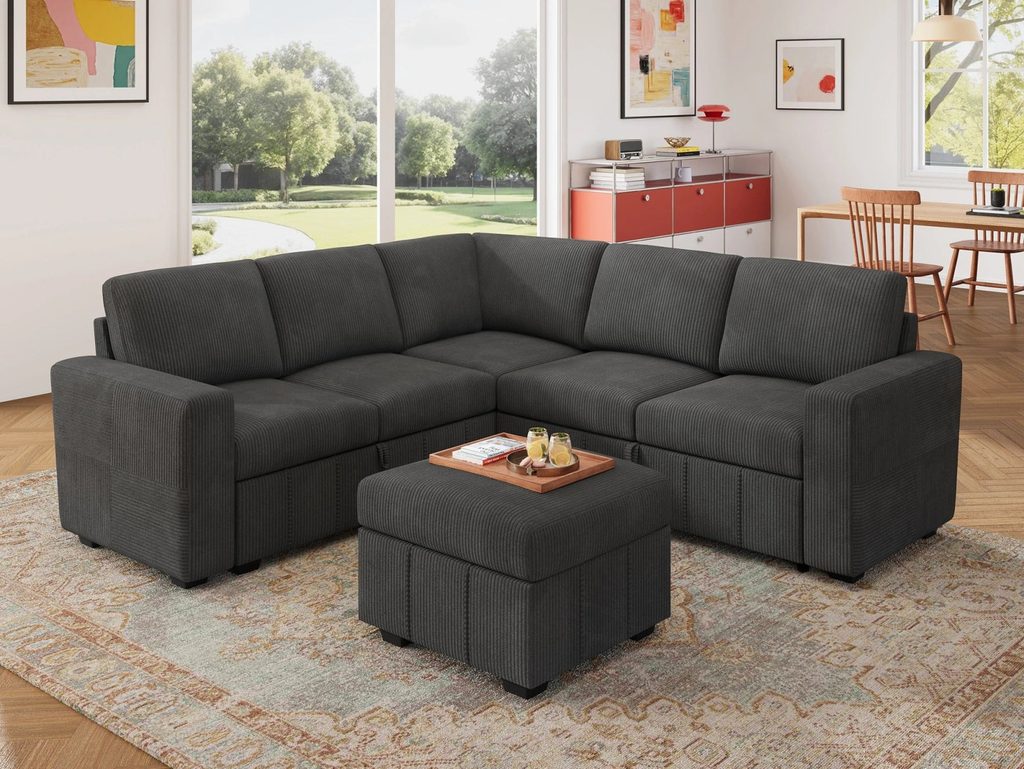
Buying your first modular sofa is different from buying any other piece of furniture. Instead of picking one fixed shape, you are choosing a system that can be arranged in dozens of ways over the years. That flexibility is the whole appeal, but it also introduces choices that a traditional sofa purchase never requires. How many pieces do you actually need? Which layout should you start with? What happens if you move to a smaller apartment or upgrade to a family home two years from now? First-time buyers often feel overwhelmed by these questions, especially when showroom staff talk in unfamiliar language about wedges, chaises, and armless modules. This guide walks through the decisions in the order they matter, from understanding what modular really means to the mistakes that cost people time and money. By the end, you should be able to walk into a store or open a shopping page and know exactly what to look for without second-guessing yourself.
Understanding What “Modular” Really Means
The term modular gets used loosely in furniture marketing, so it helps to start with a clear definition. A true modular sofa is made of separate seat units, often called modules or sections, that connect to one another through clips, brackets, or interlocking hardware. These modules can be rearranged, separated, or added to over time, which is what distinguishes the category from a sectional. A traditional sectional is usually a fixed L or U shape that only assembles one way; a modular sofa can become an L today, a straight line next month, and two facing loveseats when you host a book club, all without new hardware.
This is why modular seating rewards patience during the buying process. If you understand the piece as a system rather than a single object, you start asking better questions, such as whether the connectors are strong enough for daily use, whether replacement modules will be available in two years, and whether the fabric will match if you order more sections later. Manufacturers that answer these questions clearly are usually the ones worth trusting for a first purchase.
Layout Options That Work for Renters and Owners
Layout planning is where first-time buyers either save themselves years of frustration or lock themselves into a shape they will resent within months. The temptation is to copy the arrangement from the product photo, but photos are staged for studios, not for actual living rooms with radiators, air vents, and irregular doorways. Sketch your room, mark the fixed elements, and then decide on the layout your household needs most today.
L-Shape, U-Shape, and Straight Configurations
The L-shape is the most versatile starting configuration and works in perhaps three out of four living rooms. It defines a conversational area, anchors a rug, and leaves one wall free for a media console or bookshelf. U-shapes are luxurious in open-plan homes but demand serious square footage; they also block sightlines, which can make small rooms feel cave-like. Straight configurations, sometimes with a chaise on one end, suit narrow apartments and studios where the sofa runs parallel to a wall. If you cannot decide, start with a straight or L-shape; both can be expanded into more elaborate arrangements later without wasting the initial pieces.
Planning for Future Moves
First-time buyers often forget to think about the next home. A modular set that works perfectly in a two-bedroom apartment might not fit through the door of a townhouse hallway, or vice versa. Ask about the width of individual modules, not just the total sofa length, because that number decides which doorways and elevators the pieces can pass through. Keep the original packaging where possible, and photograph the assembly hardware in case you need to disassemble and reassemble during a move. Modular pieces travel far more gracefully than fixed sofas when these small precautions are in place.
Fabrics, Fillings, and Frame Considerations
The visible parts of the sofa get the most attention in showrooms, but the parts you cannot see determine how long the piece will last. Frames should be built from kiln-dried hardwood at load-bearing points, with reinforced corner blocks and metal fasteners at the joints. Suspension systems, typically sinuous springs or high-tension webbing, decide how much support the seat provides over years of use. Cushions layered with high-resilience foam and a softer wrap of fiber or feather offer the best balance of shape retention and comfort; single-density foam feels fine on delivery day but loses its form faster than most people expect.
Upholstery choice comes down to lifestyle. Performance polyester blends resist stains, making them practical for households with children or pets. Textured weaves like corduroy and boucle bring visual warmth but need occasional brushing to look their best. HONBAY builds its modular collections with removable, cleanable covers on many models, which is a meaningful advantage when a spill happens or when the fabric simply needs freshening after a long winter of daily use.
Common Buying Mistakes to Avoid
A few predictable mistakes trip up first-time modular shoppers. The first is overbuying: filling out the maximum configuration because it looks generous in the showroom, then finding at home that the walkways are cramped and one module has nowhere to go. Start smaller than you think you need; you can almost always add pieces later. The second mistake is ignoring seat height and depth. Modular sofas often run deeper than traditional pieces, which suits some households beautifully but leaves shorter or older family members struggling to sit and stand comfortably. Test the depth in person or read reviews that mention it specifically.
The third mistake is neglecting the connector quality. Weak connectors let modules drift apart, creating gaps that swallow remote controls and irritate anyone who leans on the seam. Test the connection in the showroom by wiggling adjacent modules; a solid design will hold firm. Finally, avoid choosing a fabric that looks great in isolation but clashes with the rug, curtains, or wall color you already own. Bring swatches home, view them in the actual light, and decide only after seeing the sample in context.
Setting Yourself Up for Years of Flexible Seating
A first modular sofa purchase pays off for years when the decisions are made in the right order. Start by understanding the modular system rather than fixating on a single shape, plan the layout around how your household actually uses the room, and give real attention to frame, filling, and connector quality. Anticipate the next move and choose fabrics that fit your daily life instead of ideal-case scenarios. Once the sofa arrives, treat it as a system to explore rather than a finished object, and enjoy the freedom that comes from being able to rearrange the room whenever routines change. With careful selection at the start, the piece becomes an anchor that adapts to studios, family homes, and every stage in between, quietly proving its worth long after the initial excitement of unboxing has faded.