A product may spend months in development before it reaches the market, but customers often form their first impression within seconds of seeing its package. The condition of the carton, the quality of its printing, and the appearance of its outer wrapping all contribute to how a brand is perceived. Even a well-designed product can lose some of its appeal if the packaging arrives with damaged corners, loose film, or an inconsistent finish.
For manufacturers, maintaining packaging quality becomes more challenging as production volumes increase. A process that works for a small number of cartons may become slow and difficult to manage when thousands of units need to be prepared for distribution. Manual wrapping also introduces differences between operators, making it harder to achieve the same appearance across every batch.
Automated overwrapping provides a practical way to address these challenges. A cellophane overwrapping machine applies transparent film around cartons through a controlled mechanical process, helping businesses achieve a consistent outer finish. However, choosing the right equipment requires understanding more than its basic wrapping function. Product requirements, film performance, production conditions, and long-term operating costs all deserve consideration.
Packaging Quality Is Part of Brand Recognition
Customers become familiar with a brand through repeated experiences. When products consistently arrive in clean, properly finished cartons, that presentation becomes part of the brand’s identity. This is particularly important for businesses selling cosmetics, healthcare products, consumer goods, and other packaged items where appearance influences purchasing decisions.
Transparent overwrapping allows the original carton design to remain visible while adding a protective outer covering. Printed colours, product information, and branding can still be seen without exposing the carton directly to every handling situation.
Consistency matters just as much as appearance. If one carton has tight folds while another has loose or uneven wrapping, the difference can make a product range look less professional. Automated wrapping helps standardize repetitive packaging operations and makes it easier to maintain a recognizable finish throughout production.
Why Manual Wrapping Becomes Difficult at Higher Volumes
Manual packaging can be suitable for small businesses or limited production requirements. However, as order quantities increase, workers must repeat the same wrapping movements hundreds or thousands of times. Maintaining consistent film measurements, folds, and sealing quality throughout a long shift can become demanding.
The process also requires time for handling each carton, positioning the film, folding the material, and securing the package. When several workers perform these tasks differently, the final results may vary.
Automation can reduce the amount of repetitive manual work involved. Instead of depending entirely on individual handling techniques, the machine performs the wrapping cycle through defined mechanical movements. Operators can concentrate more on material supply, quality inspection, and monitoring production.
This does not eliminate the need for human involvement. Equipment still requires trained operators, regular adjustments, and inspection. Its main advantage is making a repetitive process more controlled and predictable.
How Film Folding Influences the Finished Package
Overwrapping is not simply a matter of covering a carton with transparent material. The film needs to be measured, positioned, folded, and sealed correctly to create a neat finish.
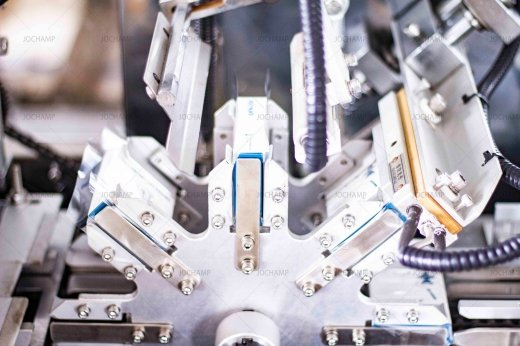
During the wrapping cycle, the carton enters the machine and is positioned for film application. The material is supplied around the package, while folding mechanisms create the characteristic envelope-style edges. The overlapping sections are then secured through the machine’s sealing system.
The accuracy of these movements influences the appearance of the finished product. Uneven film positioning can result in inconsistent edges, while unsuitable sealing conditions may cause weak joints or visible damage.
Carton dimensions also matter. If the box is irregular, damaged, or outside the machine’s supported size range, achieving consistent folds can become more difficult. Manufacturers should therefore check carton quality before introducing products into an automated wrapping process.
Choosing Between Different Transparent Film Materials
Film selection affects appearance, material consumption, and machine performance. Cellophane and BOPP are both used in transparent packaging applications, but they are different materials with distinct properties.
Cellophane is cellulose-based, while BOPP is a polypropylene film. Depending on the application, they may differ in flexibility, barrier characteristics, clarity, and sealing requirements. Manufacturers should not assume that a machine designed for one material will automatically handle another without suitable adjustments.
Film thickness is another important consideration. A thinner material may help reduce packaging costs, but it must still provide the strength required for the intended product. A heavier film may offer different handling characteristics but could increase material consumption.
Before selecting a film, businesses should consider the following:
- Transparency and surface appearance required for the product.
- Compatibility with the machine’s feeding and sealing system.
- Film thickness and resistance to tearing during handling.
- Availability and consistency of material supply.
- Overall cost based on expected production volume.
Testing the material with actual cartons is a reliable way to determine whether it produces the required finish.
Managing Packaging Requirements Across Multiple Product Lines
Businesses that manufacture several products often work with cartons of different sizes and shapes. A machine selected for one product may not automatically suit every other item in the range.
Before purchasing equipment, manufacturers should identify the dimensions of their regular packaging formats. They should also consider whether cartons vary in weight, construction, or surface finish. These details help determine the machine’s operating range and the adjustments needed for different products.
Changeover time can have a considerable impact on production planning. If operators need to switch between several carton sizes during the day, an equipment design that allows convenient adjustments can help reduce interruptions.
It is also important to ask whether additional accessories or format-specific components are required. Understanding these requirements in advance prevents unexpected expenses after installation.
Reducing Rejected Packages Through Better Inspection
A packaging line can produce a large number of cartons in a relatively short period. This makes quality inspection important because a small machine-setting problem can affect an entire batch if it goes unnoticed.
Operators should inspect the first few wrapped products after starting production or changing film rolls. They should check the alignment of the material, folding accuracy, sealing condition, and overall appearance. Any unusual result should be investigated before continuing at full production speed.
Common problems may include loose folds, damaged film, uneven sealing, and cartons that become misaligned during feeding. Their causes can vary, so operators should check the material, carton dimensions, and machine settings rather than making random adjustments.
A simple record of rejected packages and recurring faults can also help production managers identify patterns. This information makes it easier to improve operating procedures and reduce avoidable waste.
Considering Storage and Transportation Conditions
Packaging needs do not end when a carton leaves the machine. Finished products may travel through warehouses, distribution centres, delivery vehicles, and retail storage areas before reaching the customer.
Transparent overwrapping can help reduce direct contact with dust and handling during these stages. However, the overall packaging design must still provide appropriate protection for the product and carton.
Manufacturers should consider expected storage conditions, transportation distances, stacking arrangements, and handling practices. Products exposed to demanding distribution environments may require stronger cartons or additional secondary packaging beyond the outer film.
A packaging trial can help identify weaknesses before large quantities are manufactured. Businesses can inspect wrapped products after handling and transportation simulations to evaluate whether the complete packaging arrangement is suitable.
Preparing the Factory for Automated Overwrapping
Installing new machinery requires more planning than simply finding an available space on the factory floor. The equipment needs suitable electrical connections, operator access, material storage, and room for finished packages to move toward the next stage.
The machine’s position should also support the existing production sequence. If cartons have to travel unnecessary distances between workstations, the installation may create additional handling instead of improving efficiency.
Visual planning platforms such as Dreamina can help teams explore possible factory arrangements and create preliminary layout concepts. These visuals can support internal discussions, while final decisions should always be based on actual equipment dimensions, technical documentation, and workplace safety requirements.
Manufacturers should also confirm installation arrangements and operator training with the supplier before delivery. Proper preparation can reduce the time needed to bring the equipment into regular production.
What to Evaluate Before Purchasing Packaging Machinery
Selecting equipment is a long-term business decision. A machine that appears affordable initially may become expensive if it requires frequent adjustments, consumes excessive material, or cannot accommodate future product variations.
Buyers should compare several practical factors:
Production capacity: Determine whether the machine can meet normal output requirements without relying entirely on its maximum advertised speed.
Product dimensions: Confirm the carton size range and whether the equipment can handle the intended package shapes.
Material compatibility: Check the supported film types, thicknesses, and sealing requirements.
Operating flexibility: Understand how easily operators can adjust the machine when changing products.
Maintenance arrangements: Ask about cleaning, routine inspections, replacement parts, and technical support.
Supplier assistance: Confirm installation guidance, operator training, warranty terms, and after-sales service.
A demonstration using the buyer’s own packaging materials can provide useful evidence of how the machine performs under realistic conditions.
Conclusion
Professional packaging is not just about making products look attractive. It helps businesses maintain brand consistency, manage distribution requirements, and present finished goods in a condition that reflects the quality of their products. As production grows, relying entirely on manual wrapping can make these standards harder to maintain.
For manufacturers considering a cellophane overwrapping machine, the best approach is to evaluate equipment according to actual production needs. Carton compatibility, film performance, wrapping consistency, changeover requirements, maintenance, and supplier support should all influence the purchasing decision.
Before committing to an investment, request technical details and arrange a practical demonstration with your own cartons and film. This allows you to assess the finished package, understand the machine’s operating requirements, and identify potential limitations early. Choosing equipment that fits both current operations and future production plans can help reduce avoidable costs while building a more reliable and professional packaging process.