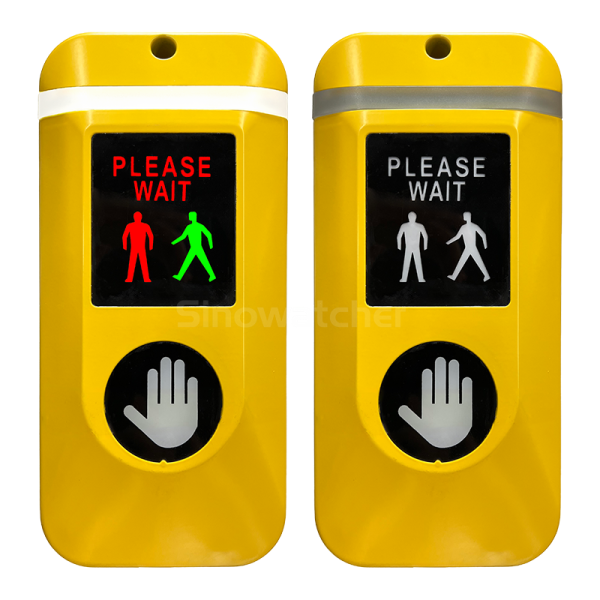
As cities become more crowded, managing the movement of pedestrians and vehicles requires careful attention to the small details of street infrastructure. Intersections, school entrances, shopping districts, public transport stops, and hospital surroundings often bring different road users together within a limited space. In these environments, even a simple pedestrian crossing needs to be easy to understand, accessible, and responsive to the needs of people using it.
Traditional pedestrian crossings commonly rely on physical push buttons to request a walk signal. Although this method has served cities for many years, it can create practical difficulties in locations with heavy foot traffic. People may hesitate to touch shared surfaces, while users carrying shopping bags, pushing strollers, or using mobility aids may find certain button placements inconvenient. These challenges have encouraged transport planners to consider alternatives that make crossing requests easier to activate.
A smart pedestrian crossing system introduces a different interaction by allowing pedestrians to request a crossing without physically pressing a conventional button. Contactless activation can make the process more convenient while supporting modern approaches to accessible and well-organised street design.
Rethinking the Small Interactions That Shape Public Spaces
Urban infrastructure is often judged by its large features, such as road capacity, bridge design, traffic signals, and public transport networks. However, the everyday experience of a street is also influenced by smaller interactions. A pedestrian waiting at an intersection needs to know where to stand, how to request a crossing, and when it is safe to move.
If the request mechanism is difficult to locate or operate, people may become uncertain about whether the crossing has registered their presence. This can be frustrating at busy intersections where several pedestrians arrive at different times. Clear instructions and responsive equipment help reduce that uncertainty.
Contactless controls offer an alternative interaction that does not require direct physical contact. A pedestrian can activate the request through an appropriate sensing area, depending on the device’s design. This can be particularly useful in public spaces where equipment is used repeatedly throughout the day by people of different ages and abilities.
The objective is not simply to replace one button with another. It is to make the crossing process more intuitive while maintaining the traffic signal’s established safety logic.
Why Hygiene Has Become a Consideration in Street Infrastructure
Public touchpoints exist in many everyday locations, including transport terminals, office buildings, shopping centres, hospitals, and pedestrian intersections. Because these surfaces are shared by large numbers of people, hygiene has become a consideration in how public facilities are designed and maintained.
A conventional push button requires direct contact each time someone requests a crossing. In a busy area, the same surface may be touched repeatedly within a short period. Although routine cleaning remains important, contactless activation can reduce the need for pedestrians to interact directly with that shared surface.
This feature may be especially useful near healthcare facilities, where visitors and patients may prefer fewer shared touchpoints. It can also improve the experience around public transport stations and commercial areas where pedestrian movement remains continuous.
However, contactless technology should not be treated as a replacement for general public hygiene practices. Equipment still requires inspection, cleaning, and maintenance. Its value lies in reducing one unnecessary physical interaction while making the crossing request process more convenient.
Accessibility Should Influence Crossing Design From the Beginning
A pedestrian crossing is not used by one type of person. Children, older adults, wheelchair users, people carrying luggage, parents with strollers, and individuals with temporary injuries may all depend on the same infrastructure.
This makes accessibility an essential part of crossing design rather than an optional improvement. Controls should be positioned where people can locate and use them comfortably. Instructions should be understandable, and the surrounding pavement should allow pedestrians to approach the crossing without unnecessary obstacles.
Contactless activation can reduce the physical effort associated with operating a traditional button. For someone carrying several items, this may make the request process simpler. It can also provide a more convenient option for people who have difficulty reaching or pressing a conventional control.
Nevertheless, accessibility involves more than the activation method. Crossing duration, tactile paving, audible indications, kerb ramps, signal visibility, and pedestrian refuge areas all contribute to a usable crossing. Contactless equipment should be incorporated into a broader design that considers different mobility and sensory requirements.
Understanding How Contactless Activation Fits Into Traffic Signals
A pedestrian crossing request is part of a coordinated traffic control process. When someone activates the request mechanism, the signal controller must recognise that request and manage it according to the intersection’s programmed sequence.
Contactless devices can provide an alternative way to initiate this interaction. Depending on the technology, a sensing area detects a nearby hand or another intended gesture and sends a request to the connected control system. The pedestrian then follows the crossing indications displayed by the traffic signal.
This smart pedestrian crossing system distinction is important because activating a request does not mean pedestrians can immediately enter the road. Vehicles may still have a permitted movement, and the intersection must complete its programmed transition before the walk indication appears.
Good system design should therefore make the relationship between activation and the actual crossing signal clear. A visible confirmation can help users understand that their request has been recognised, while familiar pedestrian signal indications continue to communicate when crossing is permitted.
Selecting Suitable Locations for Contactless Pedestrian Controls
Not every intersection has the same pedestrian requirements. A crossing near a primary school may experience concentrated movement at specific times, while a shopping district may have a steady flow throughout the day. Transport hubs can experience sudden increases in pedestrian demand when buses or trains arrive.
Before choosing equipment, planners should observe how people use the location. They can examine pedestrian volumes, waiting patterns, existing signal timings, accessibility barriers, and the position of nearby facilities. These details help determine whether contactless activation would improve the experience.
For example, a hospital entrance may benefit from a crossing arrangement that is straightforward for visitors who are unfamiliar with the area. Near a university, a contactless control may offer a convenient interaction for students moving between buildings. In commercial districts, it may help modernise intersections that receive frequent pedestrian use.
Environmental conditions also deserve attention. Outdoor equipment must operate reliably despite exposure to sunlight, rain, dust, and changing temperatures. The selected installation should be suitable for the location and compatible with the existing signal infrastructure.
Maintaining Reliability in High-Use Public Environments
New technology only provides long-term value when it continues to work reliably. A pedestrian control installed at a busy intersection may be activated hundreds or thousands of times over an extended period. Its design must account for frequent use and the environmental conditions associated with roadside installation.
Maintenance teams should have a clear process for checking sensor response, electrical connections, mounting stability, and communication with the traffic signal controller. Routine inspections can help identify problems before they affect the public.
It is also important to consider how equipment performs when pedestrians approach from different positions or use the crossing during crowded periods. The sensing area should be clearly identified, and the activation process should be consistent enough that users do not repeatedly attempt to make a request.
Planning teams can use visual concepts to examine how new controls might fit into an existing streetscape before installation. Dreamina, for instance, can help create preliminary visual representations of public-space layouts. These images can support early discussions about placement and appearance, although technical drawings and on-site measurements remain necessary for final decisions.
Evaluating a Modern Pedestrian Crossing Upgrade
When authorities consider upgrading an existing intersection, the decision should be based on the actual needs of the location. A modern control device may offer useful features, but compatibility with the existing signal controller is equally important.
Project teams should review the activation method, detection area, power requirements, installation arrangement, outdoor protection, and maintenance procedures. They should also confirm whether the equipment supports the intended crossing configuration and complies with applicable local standards.
The pedestrian experience should remain central throughout the evaluation. Can someone easily understand where to make a request? Is the activation area reachable? Does the signal provide clear information after the request? Can maintenance staff inspect the unit without disrupting the entire intersection?
These questions help move the purchasing process beyond technical specifications and toward practical outcomes. A successful upgrade should make the crossing easier to use while fitting naturally into the wider traffic management system.
Conclusion
Pedestrian crossings are an essential part of how people experience a city. Their effectiveness depends not only on traffic lights and road markings but also on whether the request process is convenient, accessible, and dependable. Contactless activation offers an alternative to traditional physical buttons by reducing direct interaction and simplifying one part of the pedestrian journey.
For cities planning infrastructure improvements, the strongest results come from combining suitable technology with accessible placement, clear signal communication, reliable maintenance, and careful consideration of local traffic conditions. When these elements are planned together, modern pedestrian controls can contribute to public spaces that are easier to navigate and more responsive to the people who use them every day.